Description
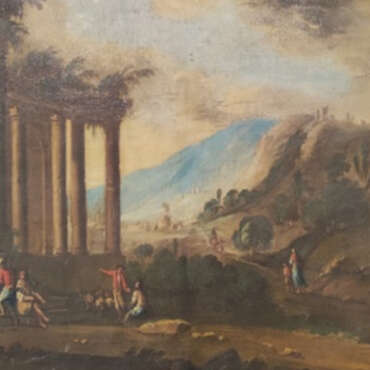
At the end of the XVII century, European tourism developed; nobles and wealthy bourgeoisie visited Italy to educate themselves and to purchase works and objects of art. This opened up a new art market: people wanted a memento of what they had visited. Francesco Guardi (1712 – 1793) proposes a subjective and evocative interpretation of the real datum thanks to the blurring of forms and melancholic penumbras. Through this work the author tried to put on canvas the memory of an Italian landscape, represented as a real individual experience linked to place, time and mood. The technique is nimble and represents the more Tiepolesque side of his painting.